Now Reading: The Fetus: Terror, Transformation, and Twisted Humor
-
01
The Fetus: Terror, Transformation, and Twisted Humor

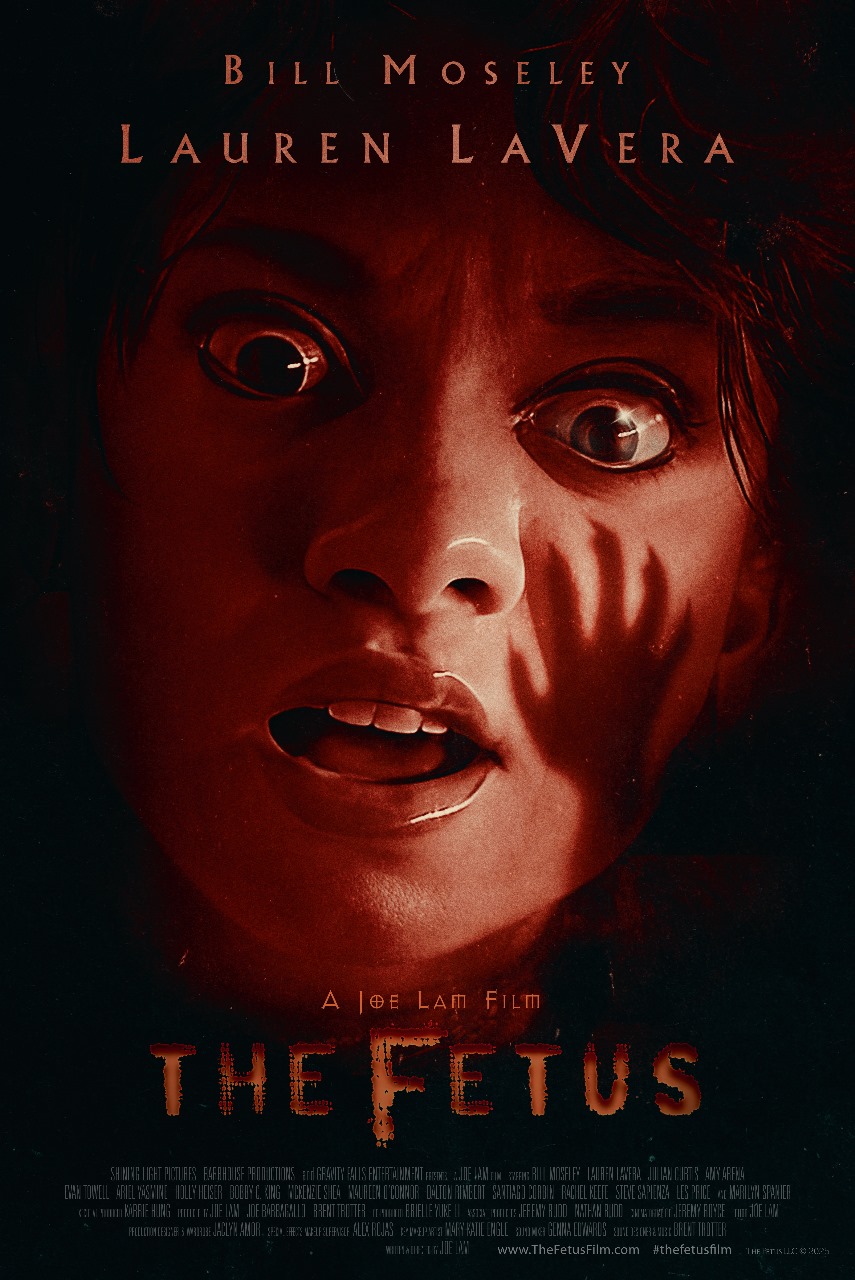
Horror has always thrived on extremes, and The Fetus seizes that tradition with a mix of grotesque imagery, intimate storytelling, and sly absurdity. Directed by Joe Lam, the film debuted on September 9, 2025, through Stonecutter Media across major platforms, offering not just blood and body horror but also a meditation on faith, betrayal, and metamorphosis.
Stonecutter Media’s Steven Karel quickly recognized its potential. “I was attracted to distribute Joe Lam’s film for a specific reason. Joe’s work was not to just create an effective impact horror film, but rather create a branded experience that can be replicated in the future. For an indie film, he worked at this by manufacturing all kinds of creative and unusual swag and distributed it at film festivals, horror influencers, and fans at random. He created online games for people to win limited-edition cool memorabilia, all in an effort to create an image of horror that can become an ongoing film series premise.â€
Lam explained that his starting point came from dissatisfaction with horror’s formulas. “The spark came from my desire to create something I hadn’t seen before. Doing something truly unique in horror is difficult, but I wanted to push the genre’s boundaries and explore themes beyond characters dying just for shock value.â€

For influence, Lam leaned on his favorites. “I kept going back to my favorite body horror films from the 70s and 80s such as The Fly, The Thing, Alien, and Invasion of the Body Snatchers. What drew me in wasn’t just the gore. It was how those films explored both inner and outer transformations. Characters weren’t simply fighting monsters, they were fighting themselves. That inner battle, whether to accept or reject what they were becoming, was what fascinated me and became the emotional core of The Fetus.â€
Religion, a longtime horror staple, also took on fresh angles in his hands. “The Fetus uses religious symbolism not just for shock value, but to explore what happens when belief is shaken, whether that belief is in a higher power or in yourself. When it fractures, the collapse within the self can be just as terrifying as any demon.â€
He emphasized balance over agenda. “I also wasn’t interested in turning the film into a sermon or a critique of religion. Instead, I wanted to show how moments of doubt and desperation can open the door to darker forces, both supernatural and emotional. At the same time, I was fascinated by the idea that even from corruption, something worth protecting can emerge. That tension between horror and hope is what fascinated me most, and it kept the story emotionally grounded.â€
The performances brought the world to life. Bill Moseley, recognized for The Texas Chainsaw Massacre 2 and The Devil’s Rejects, elevated the production with his immersive approach. “Bill wasn’t just showing up to say lines; he was building a character from the inside out. He understood his character better than anyone else in that moment, and the result was far more powerful than what I had originally scripted.â€
His instincts even trimmed the script. “One moment in particular stands out. He asked to cut three lines of dialogue I’d written and replace them with just two words while brandishing a shotgun. Many writer-directors might resist, feeling protective of their words, but I embraced it. He understood his character better than anyone else in that moment, and the result was far more powerful than what I had originally scripted.â€
Lauren LaVera also delivered unforgettable work, using her martial arts background to tackle the film’s most grueling stunts. “One nighttime sequence in the forest pushed Lauren to her limits. She had to sprint, leap, and tackle another character while weighed down by layers of prosthetic makeup. Her martial arts training took over and she rolled cleanly, protecting herself and the prosthetics. That instinctive recovery not only saved the scene but showed everyone the level of skill and resilience she brought to the role.â€

Effects played a central role in Lam’s vision. “This film required a blend of practical and visual effects, especially because the fetus creature evolves in size, anatomy, and function throughout the story. Each new stage pushed us to experiment with different techniques using puppetry, prosthetics, practical gore, green screen, and computer-generated imagery. But the guiding principle was always the same, to capture as much as possible in-camera before leaning on digital tools.â€
He also valued subtlety. “Sometimes what you leave off-screen makes the audience squirm even more, because their imagination fills in the blanks.â€
At its heart, the story is rooted in intimacy. “For me, the film only works if the relationship feels real. Beneath all the horror, it’s a story about a couple asking themselves if they’re truly ready to become parents and whether they can overcome the obstacles that come with that choice.â€
By weaving terror with relatable fears, the film draws viewers in. “By rooting the drama in those emotional truths, the supernatural amplifies the human story. The horror becomes a mirror of their deepest anxieties, and the audience stays engaged because they care about whether this couple can come together in the face of impossible odds.â€
Still, Lam never wanted only despair. “I want people to feel that even in the darkest, most impossible situations, there’s a capacity for transformation. At the same time, I want audiences to remember that The Fetus is also a horror-comedy. Yes, it tackles some heavy themes, but it also invites you to have fun, laugh, and enjoy the absurdity of it all.â€
With its cocktail of body horror, religious overtones, psychological stakes, and sharp humor, The Fetus earns its place among the year’s most memorable horror films. Lam proves that even the most disturbing stories can hide moments of heart.