
Now Reading: Only What We Carry
-
01
Only What We Carry

Review: Jamie Adams’ Film Is a Moving, Funny, and Beautifully Acted Look at Love, Loss, and Second Chances
Jamie Adams’ Only What We Carry is a small movie with a lot on its mind and a great deal of feeling in its heart. This is a film about artists, old wounds, unexpected connections, and the way people sometimes enter each other’s lives for only a short period of time but leave a lasting impression. It is not a film built around a huge plot or dramatic twists every few minutes. Instead, it is a dialogue-driven drama about people talking, remembering, laughing, hurting, and trying to figure out what comes next.
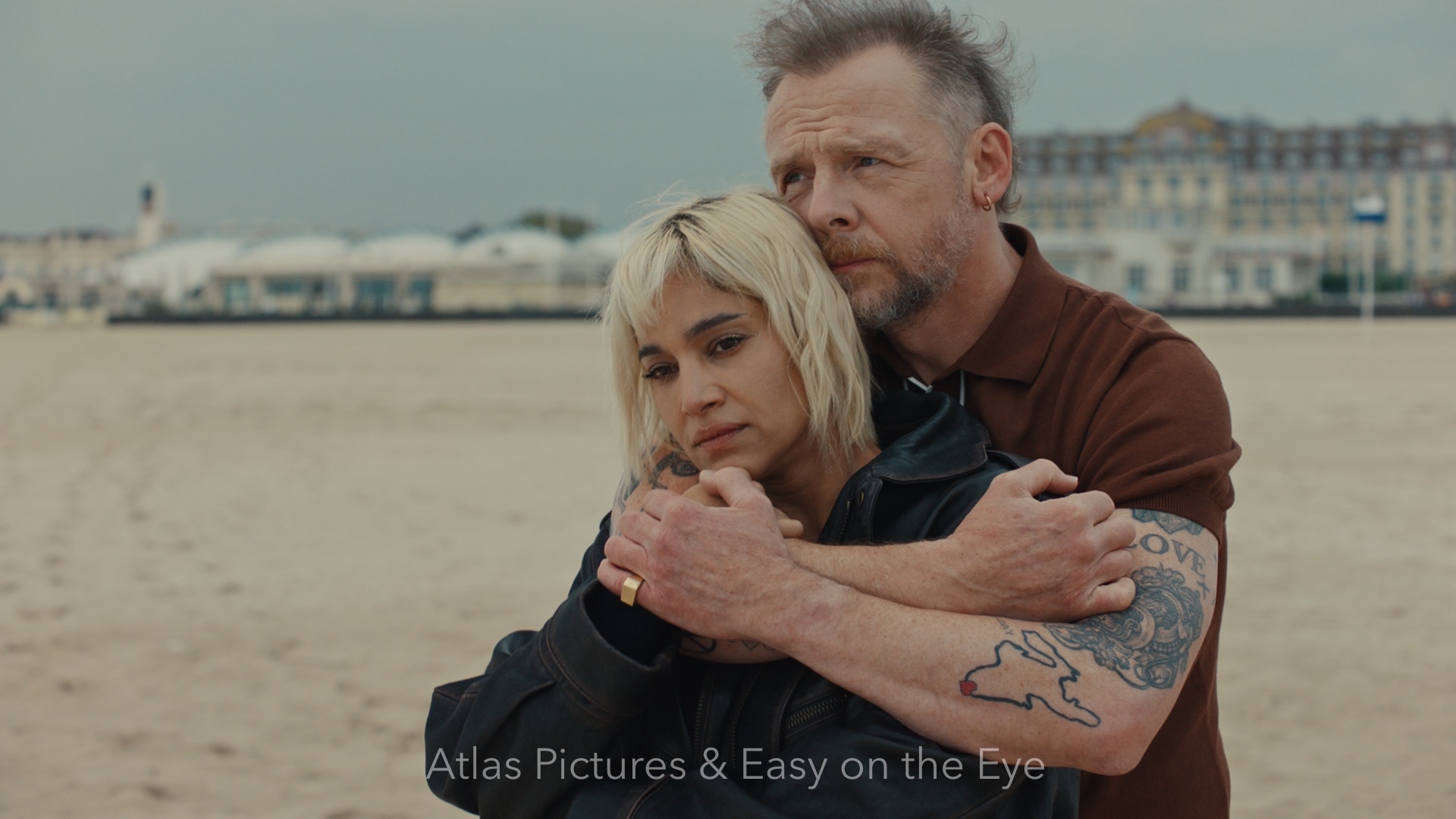
Set on the Normandy coast, Only What We Carry follows a group of people who find themselves brought together at a fragile moment in their lives. Sofia Boutella plays Charlotte Levant, a former Moulin Rouge performer who is dealing with insecurity and emotional pain after reading something written by her former choreographer, Julian Johns, played by Simon Pegg. Julian’s words suggest that he could create a dancer out of anyone, and that single idea cuts deeply into Charlotte. It makes her question her talent, her past, and the meaning of the creative relationship she once shared with him.
Charlotte travels with her sister Josephine, played by Charlotte Gainsbourg, and soon the characters become part of a loose but emotionally charged gathering that includes Julian’s publisher and friend John Percy, played by Quentin Tarantino, along with younger characters played by Lizzy McAlpine and Liam Hellmann. From there, the film becomes a story about conversations that matter. Some of them are funny, some are awkward, some are painful, and some are genuinely touching.
Adams has made a movie that depends heavily on its cast, and the cast delivers. Sofia Boutella has one of her strongest roles here as Charlotte. She plays the character as someone who is vulnerable but never weak. Charlotte is a woman at a crossroads, unsure of what her future looks like and wounded by the possibility that her past may not have belonged entirely to her. Boutella brings grace, sadness, humor, and quiet anger to the role. She makes Charlotte easy to care about because she never turns her into a simple victim. Charlotte is complicated, sometimes difficult, but always human.
Simon Pegg is also excellent as Julian. Pegg has often been known for comedy, but here he gets to show a different side of himself. Julian is charming and caring, but he is also flawed and self-involved. He is the kind of man who may have helped people become who they are while also hurting them in the process. Pegg gives the role real depth. As the movie continues, Julian becomes more than just the man who wounded Charlotte with a careless phrase. He becomes someone carrying regrets of his own, and Pegg handles those emotional moments beautifully.
One of the film’s greatest pleasures, though, is Quentin Tarantino as John Percy. Tarantino is excellent in the movie and has several key scene-stealing moments that prove he is an actor capable of holding his own with the acting heavyweights around him. It would have been easy for his presence to become a distraction, especially because audiences know him so well as a filmmaker. But Adams uses Tarantino’s recognizable personality in a smart way. John is talkative, funny, wounded, and searching for something he may not even be able to name. Tarantino brings a looseness and sincerity to the part that makes the character memorable.
His scenes with Simon Pegg are especially enjoyable. The real-life friendship between Tarantino and Pegg comes through in the movie, as the two have a wonderful relationship and bromance that rings true. Their scenes together have warmth, humor, and the feeling of two men who know each other’s habits, weaknesses, and emotional hiding places. There is an ease between them that cannot be faked. Whether they are joking around, discussing the past, or quietly facing disappointment, Tarantino and Pegg create one of the most believable relationships in the film
Tarantino also shares strong chemistry with Charlotte Gainsbourg. Gainsbourg brings her usual intelligence and mystery to Josephine, a woman who seems calm on the outside but is clearly dealing with her own questions about love, independence, and whether she wants to open herself up to something new. Her scenes with Tarantino have a strange and lovely rhythm. John and Josephine should not necessarily make sense as a pair, but that is part of what makes their connection interesting. They are two people at different points of sadness who find unexpected comfort in each other.
Tarantino’s finest moment comes in a tearjerker scene under a tree. Without giving too much away, it is one of the emotional high points of Only What We Carry and one of the moments that makes the film unforgettable. It is quiet, sincere, and deeply affecting. Tarantino plays the scene without trying to overdo it, and that restraint is what makes it work. In that moment, John’s grief and longing come through with surprising force. It is the kind of scene that stays with you after the film ends.
Another thing that makes Only What We Carry work better than expected is its comedy. This is a movie about heartbreak, insecurity, regret, and the fear of moving forward, but it is also very funny in places. The humor comes naturally from the characters rather than from forced jokes. Tarantino gets several very funny lines, Pegg brings his sharp timing to even the quieter scenes, and the film often finds comedy in awkwardness. These people are wounded, but they are not miserable all the time. They tease each other, misunderstand each other, flirt, deflect, and use humor to survive uncomfortable truths.
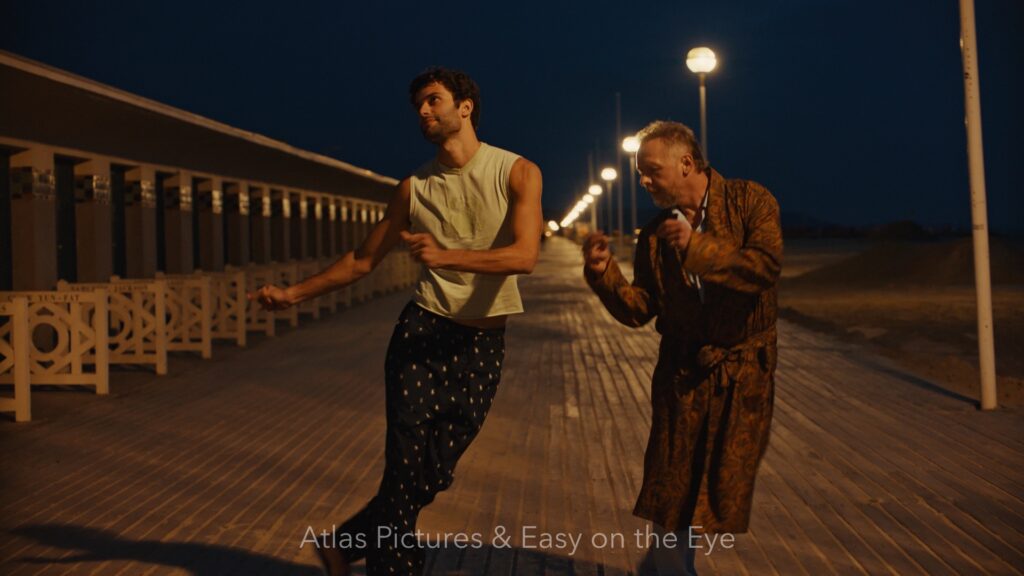
That balance between comedy and sadness is one of the film’s biggest strengths. Only What We Carry makes you laugh, but it also makes you cry in places. It understands that people often behave foolishly when they are hurting, and that some of the funniest moments in life come right next to the most painful ones. Adams does not push too hard for sentiment, but the emotion is there. The film sneaks up on you. What begins as a light, talky ensemble drama slowly becomes a moving story about what people carry from one relationship to another.
Lizzy McAlpine and Liam Hellmann also make strong impressions as Jacqueline and Vincent. McAlpine, in particular, has a natural screen presence. Her character brings a younger energy to the film and helps show how admiration, ambition, and emotional confusion can repeat from one generation to the next. Hellmann has charm and fits well into the film’s relaxed atmosphere. Their storyline is not as powerful as the material involving Boutella, Pegg, Gainsbourg, and Tarantino, but it adds texture and gives the movie a fuller sense of life.
The film is not perfect. Because it is mostly improvised and heavily based on conversation, some scenes move slowly. There are moments when the pacing could be tighter and when the story seems to drift rather than build. Some viewers may wish for a stronger plot or a more dramatic structure. But the looseness is also part of the film’s appeal. Only What We Carry feels like a movie made to capture moments rather than manufacture them. Its best scenes have the intimacy of real conversation.
What Adams does especially well is give his actors room to explore. The Normandy setting adds beauty and melancholy, but the real landscape of the movie is emotional. These characters are all trying to decide what to hold onto and what to release. Charlotte carries the pain of being misunderstood. Julian carries guilt and pride. Josephine carries uncertainty. John carries grief. The title fits the movie perfectly because this is a film about the invisible weight people bring with them wherever they go.
Only What We Carry is a touching, funny, and rewarding film. It may be slight in terms of plot, but it is rich in performance and feeling. It works because the actors are so committed and because Adams trusts them to find the truth in small moments. Sofia Boutella and Simon Pegg are terrific, Charlotte Gainsbourg is quietly magnetic, and Quentin Tarantino gives one of the film’s great surprises: a funny, vulnerable, scene-stealing performance that proves he belongs in front of the camera as much as he does behind it.
This is a movie about heartbreak and human connection, but also about the possibility of moving forward. It shows that people may not always stay in our lives forever, but the moments we share with them can still change us. Only What We Carry is warm, bittersweet, beautifully acted, and unexpectedly emotional. For fans of these performers, and especially for anyone curious to see Tarantino deliver a genuinely memorable dramatic turn, it is highly recommended.
Rating: 8/10